Help · Start here
What is in the report
Start here — the moves most worth making — then findings grouped by who acts on them, each with the evidence and the fix, and detail sections behind them.
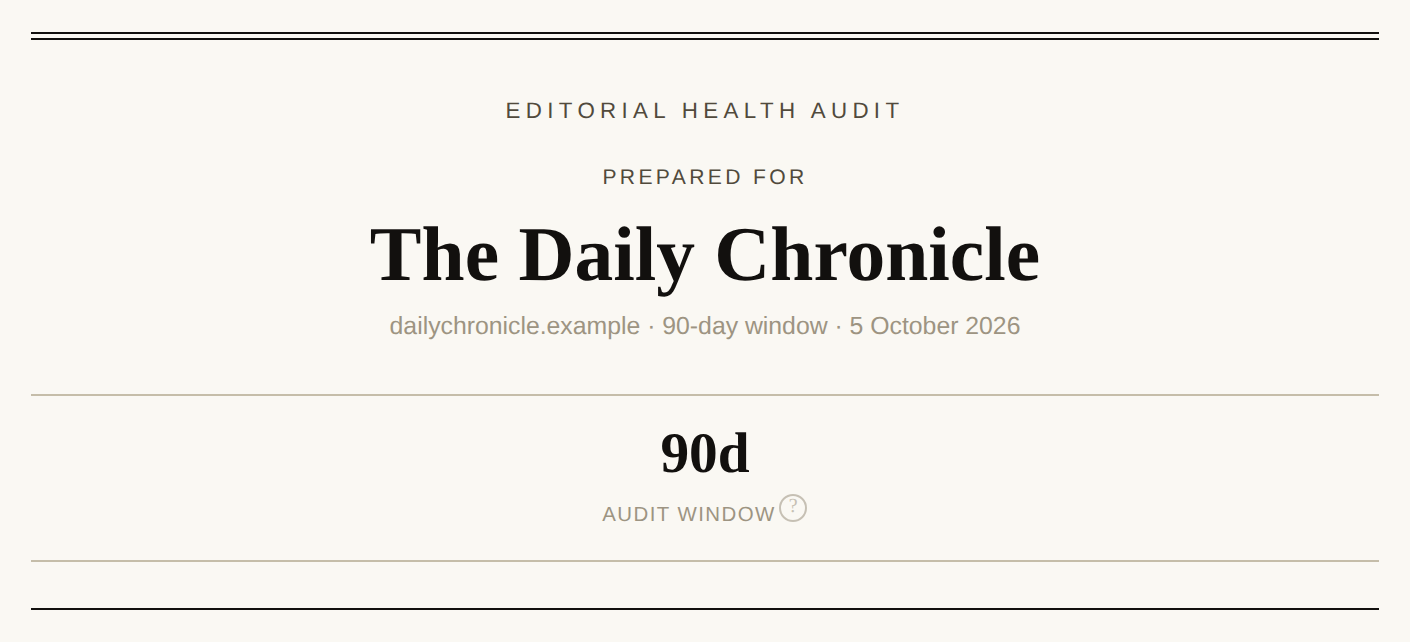
Start here. The highest-leverage moves across the report, risks first, then by how firmly each was measured.
Framing. How your newsroom builds stories — conflict, explanation, accountability — against a published codebook. Coded by a language model, and labelled so.
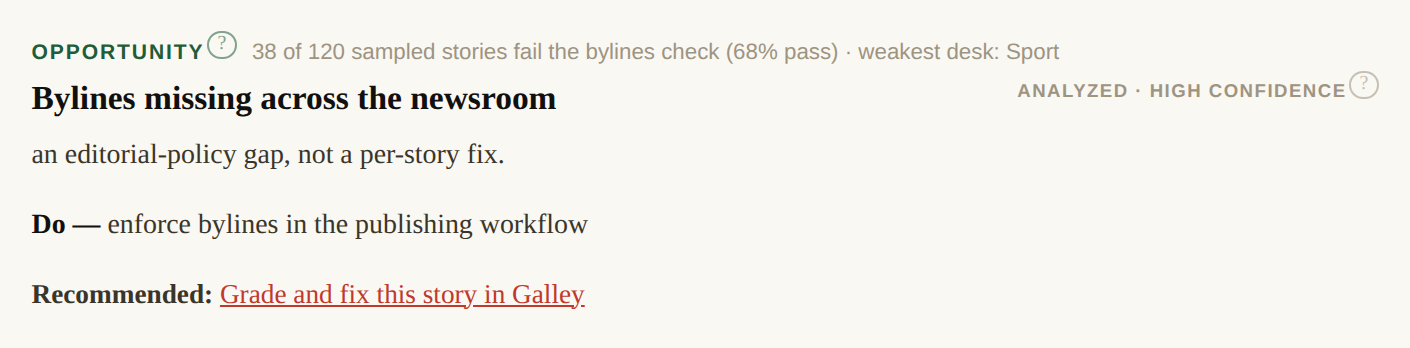
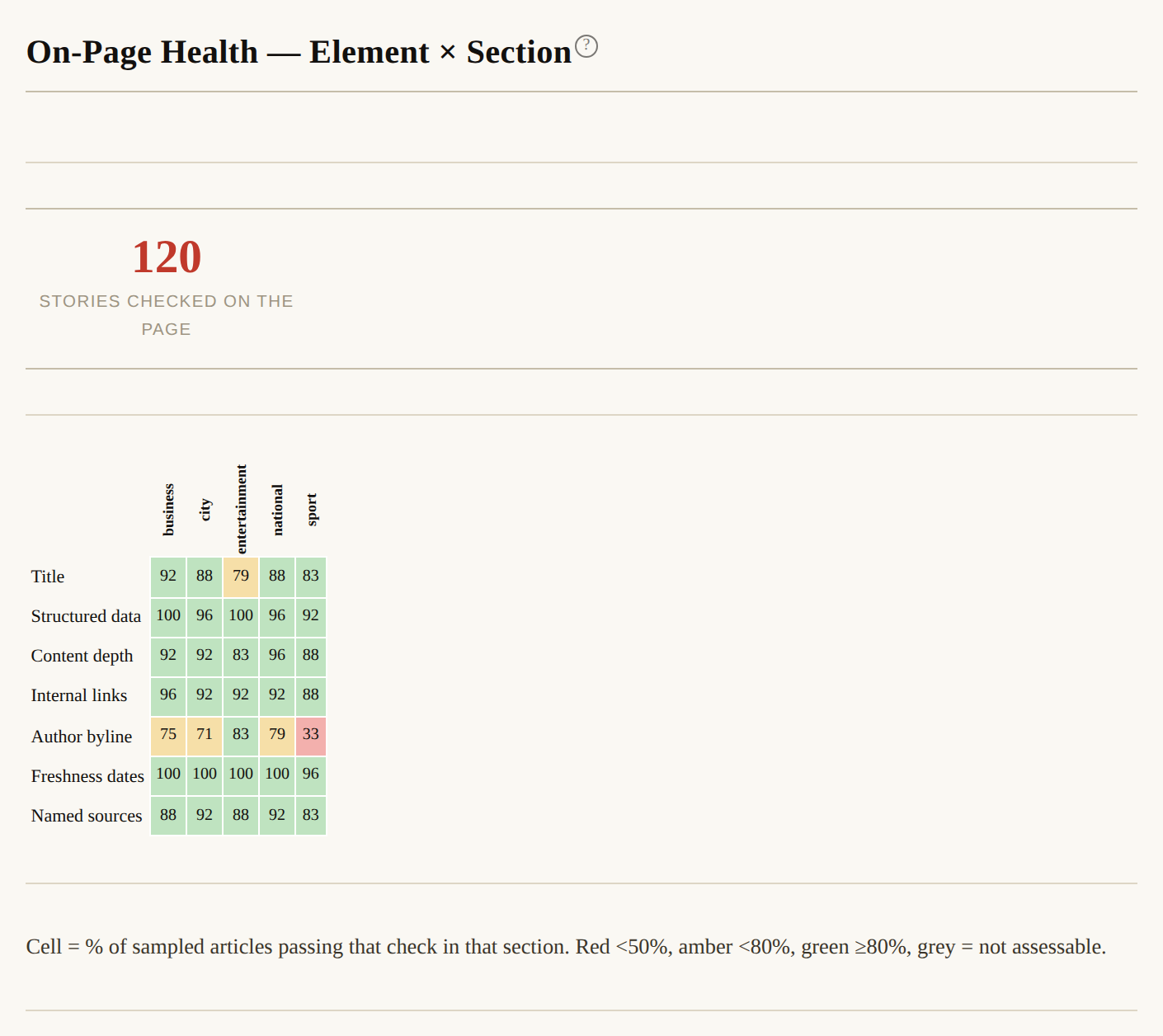
Production. Habits your journalists control: bylines, named sources, story depth, internal links and dates, with the weakest desk named.
Platform. Where Google's and AI companies' crawlers meet your pages: article markup, canonical tags, indexing, your Google News sitemap, AI-crawler rules, security headers. Mostly one change in the CMS that fixes every story.
Business. Where you stand against comparable outlets.
Detail sections. The on-page checks desk by desk, the priority fixes, and the evidence behind the findings.
Each finding is a card: a headline naming the problem, the number behind it, why it happens, what to do, and a label saying how it was produced and how confident it is.